



If your paint’s peeling, it’s likely because it’s lost its grip on the wall beneath. Usually, this boils down to shoddy prep work, moisture from humidity, using the wrong primer, or opting for low-quality paint that can’t cope with Middle Tennessee’s weather.
I get asked about this nearly every week by homeowners in Nashville and the surrounding areas.
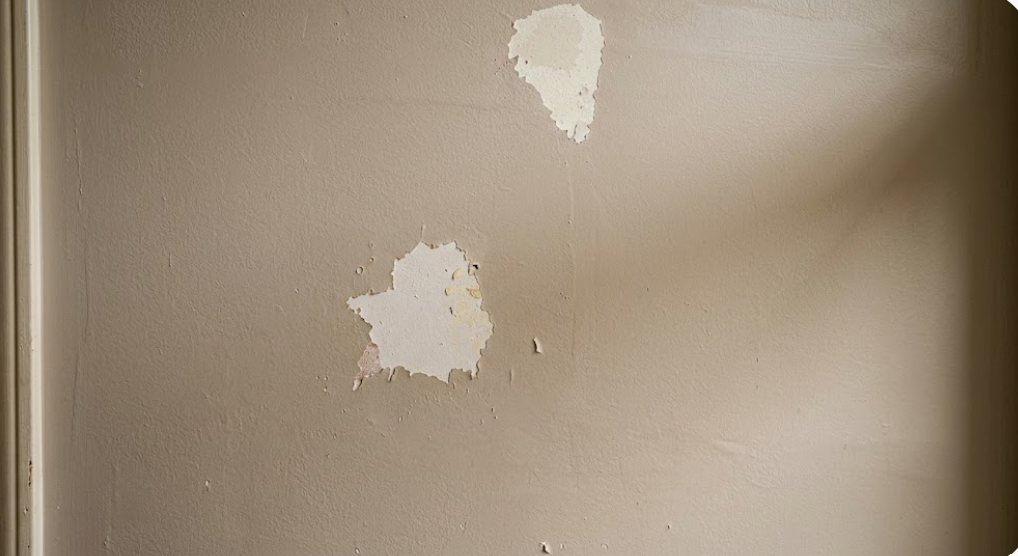
Just a couple of months ago, I visited a house near Franklin where the paint by the stairs was flaking all over the place. It was literally lifting off, and the homeowner was understandably concerned it might spread.
Paint chips when it can’t hold onto the surface beneath it. Most of the time, this is due to poor prep work, moisture problems, temperature swings during painting, or using the wrong primer and paint. The upside—once you pinpoint the real culprit, you can prevent it from happening again.
Here is what that wall looked like when I first saw it.

The main causes we see in Middle Tennessee homes
I have fixed chipping paint in all kinds of houses from Brentwood to Murfreesboro. The table below shows the reasons it happens most often and exactly how to stop each one.
This close up shows how the paint had pulled away in chunks.
How humidity and temperature swings make it worse here
You could come back from a trip to Middle Tennessee with a ruined paint job. We experience hot and humid summers, followed by sudden breaks of cooler weather. When this constant temperature yo-yo is used, the paint film expands and contracts at a different rate from the wall, which will cause little cracks to become ugly paint chips.
Don’t mistake this for blistering, which we discussed in another post.
If it’s not about chips, it’s about bubbles, then look at our guide on Paint blistering. Chipping typically is an adhesion failure, while chalking appears as a powdery residue. There is a different way to fix each issue.
So, how to prevent paint from peeling?
Looking to keep paint from flaking? The secret is in the set up. It is quite amazing that about 80% of a good paint job is preparation. This is how it works:
Firstly, thoroughly scrub the surface with a good degreaser and then rinse it off. Gently rub down any glossy areas if necessary to make them dull. Whisk off all the dust with a tack cloth or microfiber rag.
Then apply a good bonding primer.
In the project that we’re pointing to here, we applied a primer for bonding, which we used exclusively over the damaged area and allowed it to dry thoroughly. All you need to do is view this photo below and see how it came out perfectly.

After the primer dries choose a good quality paint in the right sheen for the room. Paint when the temperature is between 60 and 85 degrees and humidity is low. Give each coat plenty of dry time before adding the next one.
Following these steps stops most chipping before it starts. For small existing chips you can scrape the loose pieces, sand the edges smooth, prime, and touch up. If it covers a big area or keeps returning check out our high traffic area repainting guide for more details.
What causes paint to chip?
The main causes we see in Middle Tennessee homes are:
| What causes paint to chip | Why it happens here | How to stop it for good |
|---|---|---|
| Poor surface prep | Painting over dust, grease, or glossy old paint | Clean thoroughly, sand, and wipe down before any new coat |
| Wrong or missing primer | Latex painted straight over old oil paint or raw surfaces | Always use a quality bonding primer matched to the surface |
| Moisture and humidity | Our sticky Middle Tennessee summers and big temperature swings | Fix any leaks first and paint only when humidity stays below 55 percent |
| Low quality paint or products | Cheap paint that cannot handle our weather | Choose proven paints like Sherwin Williams Duration or Emerald |
| High traffic and impact | Kids, pets, or furniture rubbing the wall | Use a higher sheen paint like eggshell or satin in busy areas |
| Age of the existing paint | Old layers that have become brittle over time | Remove loose material completely and start fresh with proper prep |
In that Franklin area home the paint had been applied years ago without enough prep on a slightly glossy surface. Our humid summers did the rest. That is why it started flaking near the window where temperature changes hit hardest.
A quick word on older homes and lead paint
If your house was built before 1978 the existing paint might contain lead. Never dry scrape or sand without testing it first. Grab an inexpensive lead test kit from the hardware store or call a pro who is set up to handle it safely.
When you should call a professional painter
Small touch ups are fine for a handy homeowner. But if the paint keeps chipping in multiple rooms or you want it solved once and for all it pays to bring in experienced help. Our crews see these issues every week and we know exactly how to stop them.
That is one reason our interior painting service includes a two year written guarantee on every job.
If the paint chips we come back and make it right at no extra charge. We also inherited high standards from my grandfather who ran a painting business for over fifty years. Getting a free estimate is easy and we serve all of Middle Tennessee including Nashville, Franklin, Brentwood, Murfreesboro, and Columbia.
Frequently asked questions
So does why is my paint chipping?
There’s a good chance that the paint has lost its tack to the wall. Some usual culprits? The problem may be due to inadequate preparation of the work, the constant humidity during our hot summers, or to the use of an incompatible primer.
What can I do to prevent paint from chipping?
There’s a lot of preparation that needs to be done, some sanding, the bonding primer, the quality of paint, conditions – temperature and humidity etc.
What causes paint to chip and peel?
Common causes for both are moisture, paint failure to adhere or being incompatible with each other. Peeling will come off in larger pieces, whereas chipping results in smaller pieces.
Does humidity lead to paint flaking off?
Yes, particularly in Middle Tennessee! Due to high humidity, the paint is unable to cure the way it should and the temperature fluctuations cause the paint film to expand and contract which will eventually lead to failure.
Is it possible to paint over paint that is flaking off?
Nope. Those loose bits have to be taken off first, or the new paint will simply fail on the same spots! Get rid of anything that’s not firmly attached before you start.
We have been working on Paint issues in Middle Tennessee for some time now. It’s really satisfying to see a wall going from flaking and looking beat-up, to smooth and sound. If you’re getting on top of your paint, send us a message! We’d be happy to help.